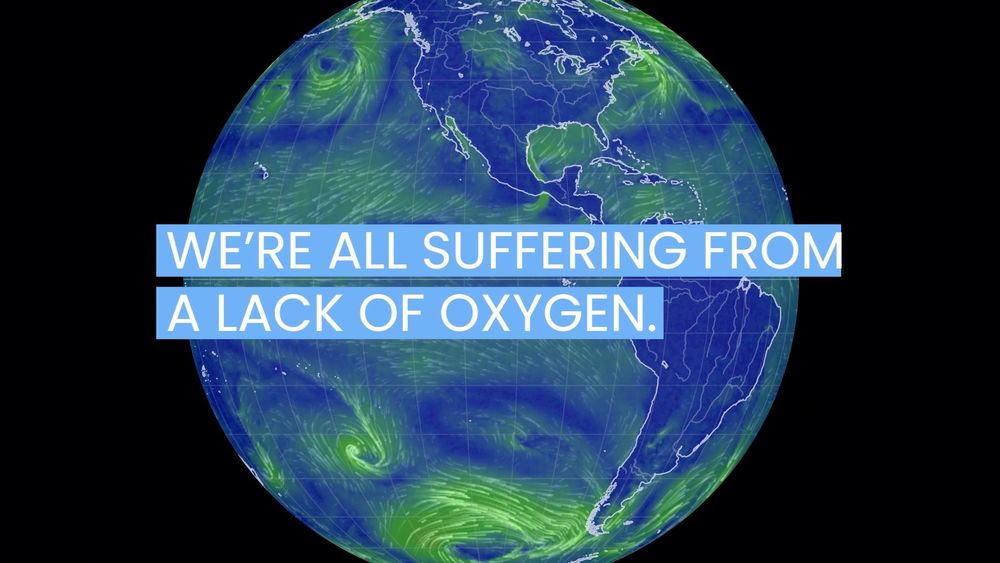
the air we breathe
Christina BattleCombining research about Edmonton’s air quality, along with personal storytelling and speculative imaginings, the air we breathe deeply considers the complicated ways in which our air impacts us: from the way that smells travel through it and the memories they evoke; to the physical impacts of pollutants through shared inhalation; to the ways in which the air serves as a metaphor of connection in a cultural sense.
Document with No End
Kym McDanielDocument with No End contends with the impact of environmental collapse on interpersonal relationships, disability, and an "unknown future". The filmmaker draws connections to her (and her cat's) autoimmune disease and the Great Salt Lake—a drying body of water in Salt Lake City, Utah—that has become disabled due to capitalism. Questions are posed regarding the future of the planet, human survival, and the feminist negotiations necessary to stay in relationship, despite disease and fear.
Less Lethal Fetishes
Theo CuthandNot a sex video, maybe a sexy video? About a latent gas mask fetish, but maybe actually about a certain art world tear gas controversy the filmmaker was involved in? But also about Chemical Valley in Southern Ontario? But with, like, a dick and tits and vag and gas masks and smoke bombs, lots of smoke bombs. A pretty film about weird shit.
Sangre Pesada (Heavy Blood)
Naomi Rincón-GallardoIn Sangre Pesada (Heavy Blood), the devastated landscape of an open-pit mine in Vetagrande Zacatecas, Mexico hosts ghostly creatures designing obstacles against progress. A cast of characters, unwanted and desiring, dwell among the crushed rocks and corrosive air. But they want something more than survival—they want to play loud, they want to play too hard, in ecstasy.
Caves of Our Insides
Sabīne ŠnēCaves of Our Insides explores our connections to the Earth, tracing how iron links human bodies to the planet's core. It reflects on iron’s dual role as both a life-giver, essential to blood and breath, and a force of destruction, forged into the weapons that disrupt various forms of beings.
bodily burden
bodily burden features a constellation of five short films that are entangled by breath as a means of understanding the relationship between the climate crisis and the permeable bodies and environments that are radically altered through the toxic accumulations of extractive industry. How do we begin to process such entanglements, particularly as many forms of pollution are invisible, silent, and scentless? The contributors to this program share filmic strategies to contend with environmental harm and the rise in chronic illness and disability, working with elements of experimental documentary, speculative fiction, personal storytelling, and theatrical performance. Although bodily burden is shot through with grief and loss, there are occasional glimmers of humour and absurdity, too.
These works traverse distinct locales, beginning in a swirl of smog and particulate matter in Edmonton through Christina Battle’s the air we breathe, a film whose tendrils are also tied to Ontario’s “Chemical Valley”—grounding the program in a Canadian context. Kym McDaniel’s film Document with No End brings viewers to the American Southwest, anchored by the “Environmental Nuclear Bomb” that is Utah’s Great Salt Lake—a site in which increasing drought has exposed polluted sediment, contributing to airborne arsenic and heavy metals as well as historic nuclear testing during the 1950s with its impact on downwind communities. Through questions about the entanglement of harmful corporations and arts funding or art governance, Theo Cuthand also homes in on Chemical Valley, considering the health impacts of the petrochemical industry on the Aamjiwnaang First Nation in Less Lethal Fetishes. With Sabīne Šnē’s video work, Caves of Our Insides, the program zooms out from these specific contexts to sit with the planetary relationships of the more-than-human through the element of iron. bodily burden closes in the toxic ruins of an open-pit mine in Veta Grande Zacatecas, Mexico with Naomi Rincón-Gallardo’s Sangre pesada (Heavy Blood). While breath moves throughout the entirety of the program, there is an intentional and gradual movement from the skies of Battle’s opening work to the ground beneath our feet with Šnē and Rincón-Gallardo.
The health impacts of the nuclear-industrial complex, mining operations, petrochemical processing, military manufacturing and chemical warfare–all subjects that weave through this program—attack every system of the body, yet the biological impacts are often hard to prove. The writer and activist Sunaura Taylor’s concept of “disabled ecology” is central to bodily burden as a way of describing the networks of human and more-than-human disablement that are created when ecosystems are profoundly altered by various industries. Throughout the program, there are ripples of recognition that the distribution of these effects stem from environmental racism and Indigenous land dispossession, which inform the location of industrial sites alongside the determinants of gender and class. Just as the so-called “sacrifice zones” absorb the slow violence of polluting industries, the remediation of more-than-human worlds will be an intergenerational responsibility. Certain contaminants operate beyond the scale of human time—as in the case of PFAs or “forever chemicals” or the billion-year half-life of uranium. Pollution has a temporal element, just as these films weave together past, present, and future.
Please join us for a conversation with Eliza Chandler and Katie Lawson after the screening.
2 Sussex Ave, Toronto, ON M5S 1J5
Please note that for entry to Innis Town Hall, Sussex Drive is closed and inaccessible by car. The sidewalk is open and the entrance remains open. Sidewalk-level entrance, elevator and ramp available, door width 32 inches, no automatic doors. No accessible parking on-site. Four wheelchair accessible seats in the cinema. 15 step-free seats in row 9. Accessible gender-neutral washroom located on the 2nd and 3rd floor.
For a map to Innis Town Hall, click here
(ARTISTS)